

Rising Music Artist, Chad HaTTaH Is Turning Heartbreak Into Gold
There’s a moment in every artist’s story where the music stops being a career move and starts being survival. For Chad HaTTaH, that moment happened far from any stage. It happened in the desert, and later, in the quiet wreckage of a friendship falling apart.
The 37-year-old rising artist doesn’t talk about charts or streaming numbers. He talks about the caterpillar and the butterfly. He talks about kintsugi, the Japanese practice of mending broken pottery with gold instead of hiding the cracks. And he talks about a split inside himself — one half that hurts, and one half that watches, learns and chooses what comes next.
That split gave him his name. Chad is the human side: the fear, the doubt, the pain. HaTTaH is the observer, the part that steps back and finds the light. Together, they’re the story behind his new EP, a project built less like an album and more like a conversation between two versions of the same person, trying to find their way back to each other.
We sat down with Chad to talk about Burning Man, breakdowns and why he believes the mind should never lead the heart.
1. Let’s start simple. Who is Chad HaTTaH and how did you get here?
I’m an artist creating music for the journey inward. My story isn’t about having all the answers —it’s about learning to ask better questions.
My work explores what it means to find light in the darkness, to transform pain into purpose and personal growth into something people can hear, feel and carry with them. Every song is an invitation to slow down, be still and remember that growth isn’t about becoming someone else. It’s about uncovering who you’ve always been.
My journey hasn’t been defined by external milestones as much as internal ones. Like many people, I’ve wrestled with judgment, self-doubt and the fear of not living up to others’ expectations. Over time, I realized the greatest battle wasn’t with the world around me. It was with the stories I believed about myself. Music became the language that helped me make sense of those experiences and transform them into something meaningful.
That realization gave birth to Chad HaTTaH. More than a stage name, it’s a creative lens for exploring the different parts of ourselves. Through cinematic storytelling, symbolism and music, I hope to create experiences that invite people to reflect, embrace new perspectives and reconnect with the light that already exists inside them.
2. Your new EP revolves around transformation. Was there a specific moment that forced you to see yourself, or your music, differently?
Yes. I went to my first festival when I was 19 — Burning Man. That experience opened the door to a series of transformational festivals throughout California, as well as Day Zero Festival in Tulum, Mexico. During that time, I was fortunate enough to be surrounded by a community that felt like a family, one built on love, connection and care.
But like many things in life, you don’t always experience your greatest growth when everything is going right. Some of the deepest lessons come during the moments when everything feels like it’s falling apart. It was in the falling that I learned the most about myself.
I had always considered myself confident, caring and full of love. But after a falling out with the people who meant the most to me at the time, I experienced a falling out within myself. During that period, I created a narrative in which I became the victim. The more I held onto that story, the more it fueled anger and a need to be “right,” which gradually turned into constant judgment, not only toward others, but toward myself. Eventually, I became isolated. Within that isolation, a fearful, ego-driven version of myself began to emerge.
Looking back, I understand fear as a mechanism designed to protect me from experiencing that kind of pain again. It also taught me that healing didn’t begin when I stopped feeling fear. It began when I learned to meet that fear with compassion instead of judgment. Many of us learn how to protect ourselves, but we can forget how to be ourselves. Through that realization, I began to understand something important: everything is connected. And if everything is connected, there must also be a way through.
3. Many artists talk about finding their sound. When did you feel like you’d found your voice, not just as a singer, but as a storyteller?
That discovery came when I realized Chad HaTTaH was more than just music. It was a way to explore the relationship between the different parts of myself.
Chad represents the human experience — the emotions, struggles, fears and moments of suffering that shape us. HaTTaH represents the observer, the consciousness that can step back, find perspective, and choose love, courage, hope and faith.
When creating each song, I began by acknowledging where Chad was emotionally at the start of each chapter. These moments come to life through the visual experience accompanying the music, where the deeper layers of each transformation gradually reveal themselves. Through the visuals, each chapter shows the struggle Chad is experiencing before the transformation unfolds. HaTTaH’s perspective then guides the journey forward.
The EP is a short story told through the interaction between Chad and HaTTaH, symbolizing the reconciliation between these two parts of myself. The goal was never to reject the difficult aspects of who I am, but to understand them, integrate them, and find harmony between them. That process became the heart of my music: growth doesn’t come from becoming someone new. It comes from reconnecting with the parts of ourselves we may have lost along the way.
4. Transformation often comes with loss and uncertainty. How do those emotions show up on this EP, and what do you want listeners to recognize in their own lives?
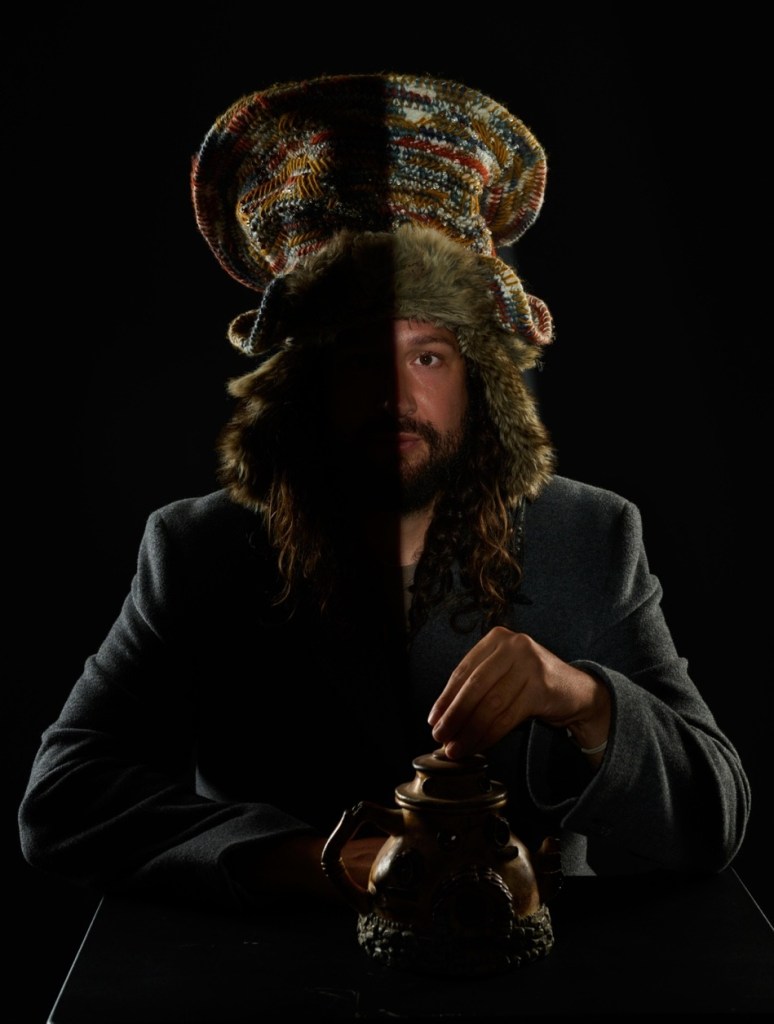
Photo credit – Olha Melokhina
Transformation rarely feels comfortable. Most of the time, it arrives disguised as loss, uncertainty, or the feeling that life is falling apart. That emotional landscape runs through this whole EP, because it’s something I know personally.
One song in particular captures that journey back. It begins with Chad searching for answers outside of himself, while HaTTaH gently guides him back to himself. Throughout the song, they have a conversation that reflects an internal dialogue many of us experience — the part of ourselves that feels hurt, afraid, or stuck, and the part that quietly reminds us another perspective is possible.
Along the way, Chad realizes something central to my own life: the mind is here to serve the heart, not the other way around. The mind is an incredible tool for solving problems, but when it leads without the heart, fear often takes the wheel. When the heart leads with love and the mind serves that purpose, life starts to move in a different direction.
The song doesn’t pretend that pain disappears. Instead, it suggests our struggles can become our greatest teachers. I reference the caterpillar becoming a butterfly, and kintsugi to show that transformation isn’t about erasing what we’ve been through. It’s about letting those experiences shape us into something wiser, more compassionate, and more whole.
More than anything, I hope listeners recognize that while our experiences shape us, they don’t have to define us. We all move through seasons of judgment, fear, grief, and uncertainty, but those seasons don’t have to become our identity. We always have the ability to choose our next step, and ultimately, who we become.
If someone finishes this EP feeling a little more compassionate toward themselves, a little less afraid of change, and a little more willing to look within instead of searching outside for every answer, the music has done its job.
You’re reaching a wider audience at a time when music is competing with endless content online. What do you want people to remember after the first listen?
I don’t expect everyone to remember every lyric or every visual. What I hope they remember is how the music made them feel.
If someone walks away feeling a little more hopeful, a little more courageous, a little more comfortable in their own skin, or a little more curious about themselves, then I’ve done what I set out to do.
I’ve never wanted to create music that’s simply consumed. I want to create experiences that stay with people long after the song ends, stories they return to at different seasons of life and discover something new each time.
If people remember me at all, I hope it’s as someone who reminded them that growth is possible, that light can be found even in our darkest moments, and that every one of us has the capacity to choose who we become.
At the end of the day, if my music helps someone take one step closer to themselves, that’s more meaningful to me than any number attached to a stream.
